
Jubileumglossy gepubliceerd.
Op zondag 15 november 2026 werd in een goed bezochte dienst in de protestantse, voormalig gereformeerde kerk ‘De Morgenster’ te Vinkeveen, herdacht dat De Morgenster honderd jaar bestaat.
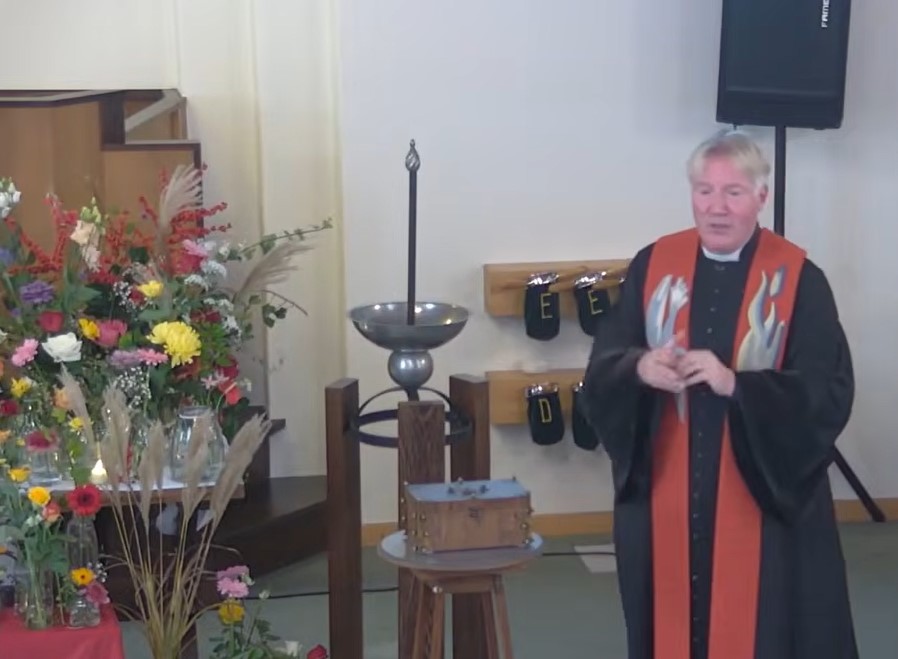
De gezamenlijke dienst (samen met de protestantse, eveneens voormalig gereformeerde Ontmoetingskerk in Wilnis), werd geleid door ds. Erick Versloot en de organist was Timo Nobel, 18 jaar jong, die tijdens deze dienst voor het eerst als organist voor de begeleiding van de gemeentezang zorgde. Ook werd medewerking verleend door New Sound uit Huizen.
Liederen en lezingen.
Enkele van de gezongen liederen waren lied 280 (‘De vreugde voert ons naar dit huis‘), psalm 96 (‘Geef aan de Heer, alle geslachten, geef aan de Here lof en krachten‘) en lied 801 (‘Door de nacht van strijd en zorgen schrijdt de stoet van pelgrims voort‘) en het lied ‘Mensenzoon tussen de kandelaren‘.
In de Bijbellezingen werd gelezen over de gedenkstenen die Jozua in de Jordaan liet plaatsen en de steen die Jacob bij de Jabbok oprichtte.
De verkondiging.
In de verkondiging sprak de predikant woorden van de volgende strekking:
“Wat houden we van het huis van God! Dat geldt zeker voor De Morgenster en voor de Ontmoetingskerk in Wilnis. Er is in deze gebouwen veel gebeurd. Generaties mensen hebben elkaar hier ontmoet, met elkaar geloof gedeeld en lief en leed beleefd. Wat ons daarbij bindt, is Christus”.
“Een kerkgebouw is meer dan een stapel stenen. Het is een plek vol herinneringen en betekenis. We denken aan kinderen die hier gedoopt zijn, aan mensen die elkaar hier trouw hebben beloofd, aan de vieringen van Kerst en Pasen, aan jubilea, maar ook aan de mensen van wie we hier afscheid hebben moeten nemen. Het gebouw is als een verzameling merkstenen in ons leven: plaatsen en momenten die ons blijven herinneren aan wat we hebben meegemaakt en aan Gods aanwezigheid daarin”.
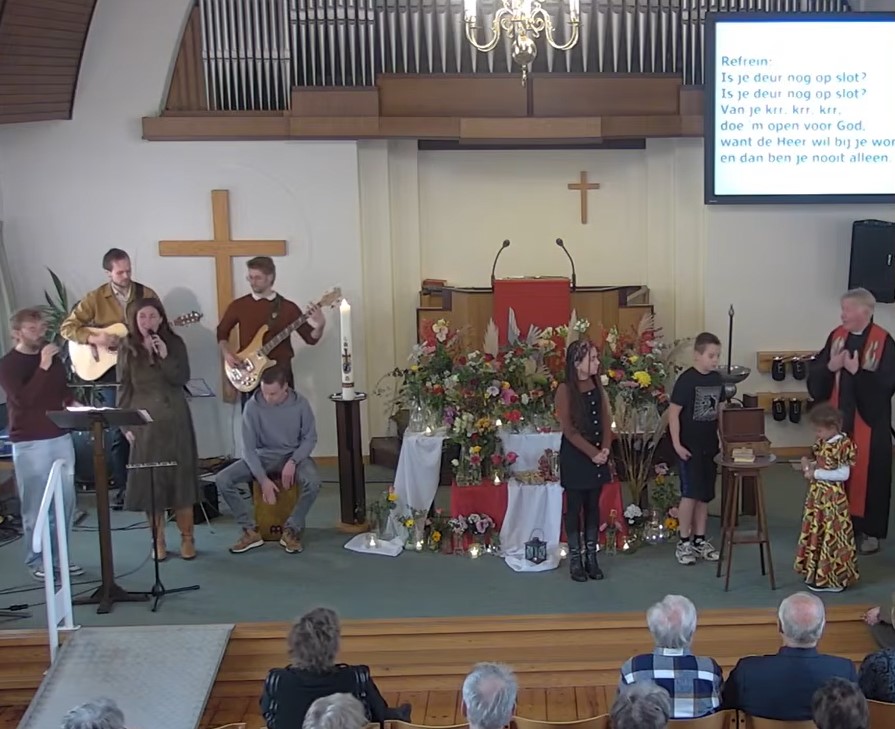
“Dat doet denken aan Jakob, die bij Bethel een bijzondere ontmoeting met God had. Die plek kreeg voor hem een blijvende betekenis. Het was een markeerpunt in zijn leven: daarna was niets meer hetzelfde”.
“Soms wordt gezegd: ‘We investeren niet in stenen, maar in mensen’. Dat is een mooie gedachte, maar we kunnen niet zonder een plek om samen te komen. Bovendien is ook dit gebouw mede tot stand gekomen door de inzet, de gaven en de betrokkenheid van mensen! Denk aan iedereen die oliebollen bakte, boeken verkocht of zich op een andere manier inzette om de kerk en de pastorie in stand te houden! Die mensen en de voorgangers gaan voorbij, maar de stenen blijven staan! Ze vertellen het verhaal van generaties gelovigen”.
“Daarom moeten we nooit kiezen tussen mensen en stenen. Beide doen ertoe. Het gebouw heeft betekenis door alles wat mensen er samen hebben beleefd. Tegelijkertijd geldt: de Kerk zijn wij”.
“Vanuit die gedachte komen we bij het beeld dat Petrus gebruikt in zijn brief: wij zijn levende stenen. Christus is het fundament, de Hoeksteen waarop alles rust. Hij is door mensen verworpen, maar door God uitgekozen. Op Hem kunnen we bouwen en vertrouwen. Zonder Christus als fundament stort het bouwwerk uiteindelijk in. Zijn Geest is als het cement dat ons met elkaar verbindt”.
“De kinderen lieten met lego zien hoe belangrijk een stevig fundament is bij het bouwen. Afbreken gaat gemakkelijker dan opbouwen. Ook met de jongeren werd nagedacht over de vraag waarop en waarmee je bouwt. Naar de kerk komen, luisteren naar de Bijbel, samenwerken, meedoen en aanwezig zijn: het zijn allemaal manieren waarop je bijdraagt aan de opbouw van de geloofsgemeenschap”.
“Op de vraag of ze zichzelf als levende stenen zagen, kwamen de jongeren uiteindelijk tot de conclusie dat ze dat allemaal waren. Ook wie twijfelt, niet altijd naar de kerk gaat of nog zoekende is, hoort erbij. Iedereen draagt op zijn of haar eigen manier bij”.
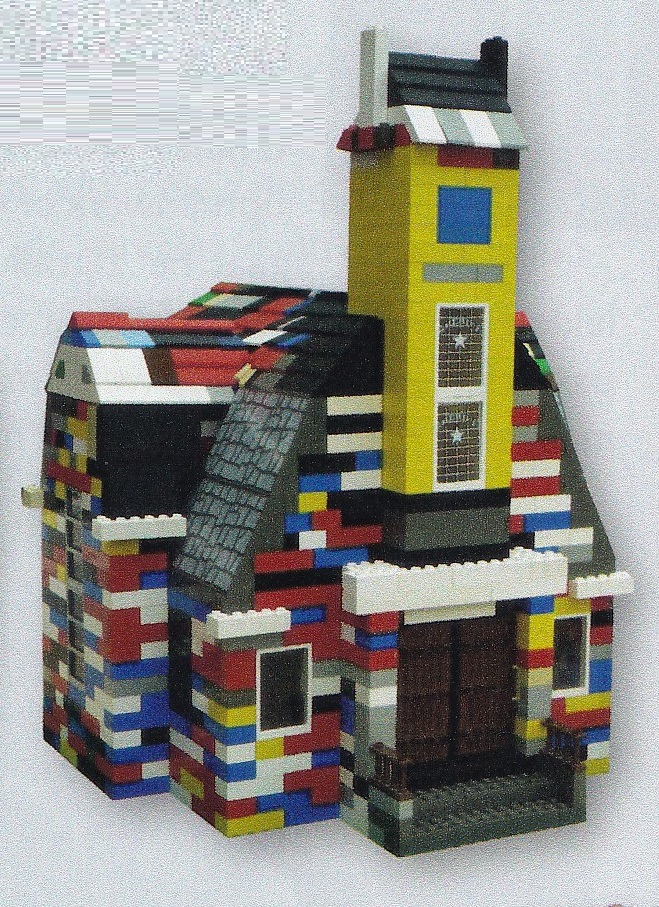
“Een mooi voorbeeld daarvan is onze Morgenster, die ooit helemaal van Lego werd nagebouwd. Daarvoor waren maar liefst 1100 steentjes nodig. In honderd jaar tijd zijn er veel meer dan 1100 mensen bij de kerk betrokken geweest. De geschiedenis van de kerk, die duizenden mensen nu kunnen lezen op de website GereformeerdeKerken.info, laat zien hoe een gemeenschap groeit, bloeit en ook weer kleiner kan worden. Iedere steen heeft zijn eigen functie. Als je er één weghaalt, kan het bouwwerk minder stevig worden”.
“Dat beeld is ook een oproep voor de toekomst. Juist in een tijd waarin kerken te maken hebben met krimp en onzekerheid, mogen we ons blijven vasthouden aan Christus als fundament. We zijn allemaal geroepen om levende stenen te zijn: aanwezig, betrokken en bereid om te dienen”.
“De kerk is niet alleen een gebouw dat we bewaren vanwege het verleden. Het is ook een gemeenschap die we samen vormgeven met het oog op de toekomst. Een gemeenschap die het licht van Christus verspreidt en hoop blijft uitdragen, juist wanneer de toekomst soms hopeloos lijkt”.
“Zo mogen we, ondanks alle krimp en onzekerheid, blijven putten uit de bron en geloof, hoop en liefde doorgeven en voorleven”.
Uitreiking van de jubileumglossy.
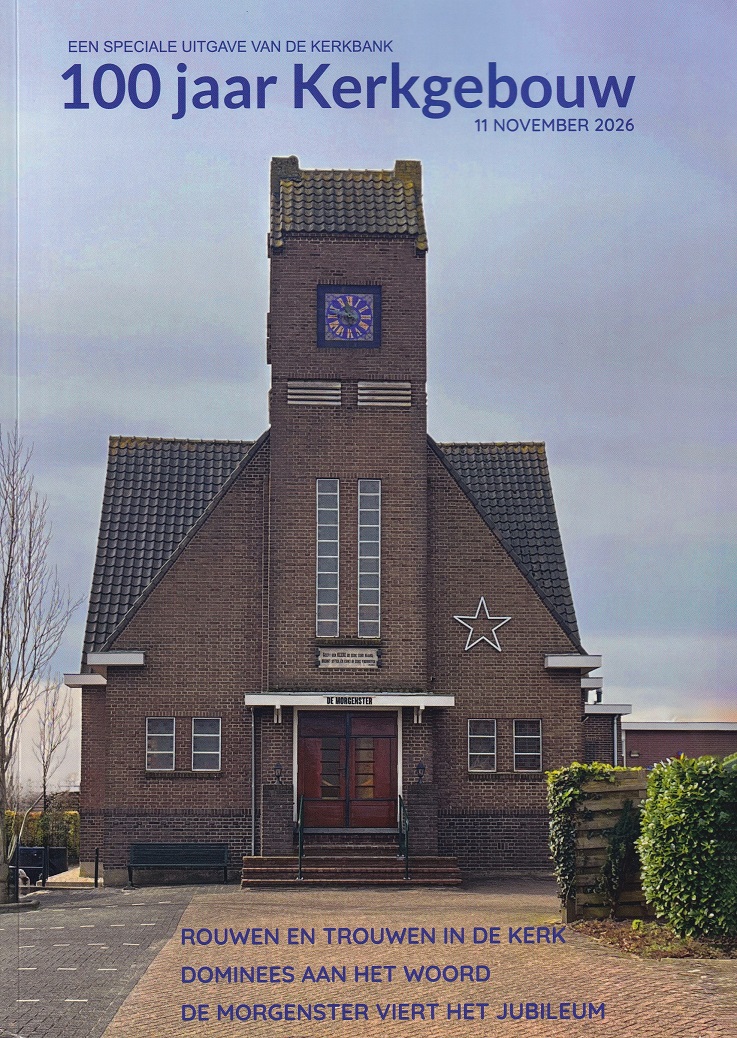
Na afloop van de dienst werd de jubileum uitgave uitgereikt. Op de beamer werd een door een grote strik verborgen voorkant van deze jubileumglossy getoond. “Het boek vertelt niet alleen de rijke geschiedenis van dit mooie gebouw, maar vertelt vooral het verhaal van onze levende kerkgemeenschap”. Het allereerste exemplaar werd aan vrijwilliger van het eerste uur, Jan Kroon, aangeboden.
- Morgen hopen we uitvoerig terug te komen op dit jubileumboek.
Translation into English:
Commemoration of 100 Years of “De Morgenster” in Vinkeveen.
Anniversary magazine published.
On Sunday, 15 November 2026, a well-attended church service was held at the Protestant Church, formerly the ‘Gereformeerde’ Church, known as De Morgenster in Vinkeveen, to commemorate the church’s 100th anniversary.
The joint service, held together with the Protestant Church, also formerly ‘gereformeerd’, known as the Ontmoetingskerk in Wilnis, was led by Rev. Erick Versloot. The organist was 18-year-old Timo Nobel, who accompanied the congregational singing for the first time as an organist during this service. Musical contributions were also provided by New Sound from Huizen.
Hymns and Bible Readings.
Some of the hymns sung during the service included hymn 280 (“Joy Leads Us to This House”), Psalm 96 (“Give to the Lord, all you families of the nations, give to the Lord glory and strength”), hymn 801 (“Through the Night of Struggle and Worry, the Procession of Pilgrims Moves On”), and the hymn “Son of Man Among the Lampstands”.
The Bible readings included passages about the memorial stones that Joshua had placed in the Jordan River and the stone that Jacob erected at the Jabbok River.
The Sermon.
In his sermon, the minister expressed the following thoughts:
“How much we love the house of God! This certainly applies to De Morgenster and to the Ontmoetingskerk in Wilnis. So much has happened in these buildings. Generations of people have met here, shared their faith with one another, and experienced both the joys and sorrows of life together. What binds us together is Christ.
A church building is more than a pile of bricks and stones. It is a place filled with memories and meaning. We think of the children who were baptised here, of couples who exchanged their marriage vows here, of Christmas and Easter celebrations, of anniversaries, but also of the people from whom we have had to say goodbye here. The building is like a collection of milestone markers in our lives: places and moments that continue to remind us of what we have experienced and of God’s presence in those experiences.
This brings to mind Jacob, who had a special encounter with God at Bethel. That place acquired lasting significance for him. It became a landmark in his life: afterwards, nothing was ever the same again.
Sometimes people say: ‘We don’t invest in bricks and stones, but in people.’ That is a beautiful thought, but we cannot do without a place where we can gather together. Moreover, this building was also made possible, in part, through the efforts, donations and commitment of many people. Think of everyone who baked Dutch doughnuts (oliebollen), sold books or contributed in other ways to maintaining the church and the parsonage. Those people and the ministers who served here eventually pass on, but the stones remain standing! They tell the story of generations of believers.
That is why we should never have to choose between people and buildings. Both matter. The building has meaning because of everything people have experienced together within its walls. At the same time, one thing remains true: we are the church.
With this in mind, we come to the image used by Peter in his letter: we are living stones. Christ is the foundation, the cornerstone on which everything rests. He was rejected by people but chosen by God. He is the One on whom we can build and in whom we can place our trust. Without Christ as its foundation, the structure will eventually collapse. His Spirit is like the mortar that binds us together.
The children demonstrated, using Lego bricks, how important a solid foundation is when building something. Tearing something down is easier than building it up. The young people also reflected on the question of what and on whom we build. Coming to church, listening to the Bible, working together, participating and being present: these are all ways in which we contribute to building up the community of faith.
When asked whether they saw themselves as living stones, the young people eventually concluded that they all were. Even those who have doubts, do not attend church regularly or are still searching for their way belong. Everyone contributes in their own individual way.
A wonderful example of this is our own De Morgenster, which was once recreated entirely out of Lego bricks. No fewer than 1,100 bricks were needed to build it. Over the course of a hundred years, far more than 1,100 people have been involved with the church. The history of the church, which thousands of people can now read on the website GereformeerdeKerken.info, shows how a community grows and flourishes, but can also become smaller again. Every stone has its own purpose. If you remove even one, the structure may become less stable.
This image is also a call to action for the future. Especially at a time when churches are facing declining congregations and uncertainty, we must continue to hold fast to Christ as our foundation. We are all called to be living stones: present, involved and willing to serve.
The church is not merely a building that we preserve because of its past. It is also a community that we shape together with the future in mind. A community that spreads the light of Christ and continues to proclaim hope, especially when the future sometimes seems hopeless.
In this way, despite all the decline and uncertainty, we can continue to draw from the source and pass on and embody faith, hope and love.”
Presentation of the Anniversary Magazine.
At the end of the service, the anniversary publication was presented. On the projector screen, the front cover of the anniversary magazine was displayed, concealed behind a large bow.
“The book not only tells the rich history of this beautiful building, but above all tells the story of our living church community.”
The very first copy was presented to Jan Kroon, a volunteer who had been involved from the very beginning.
- Tomorrow, we hope to return to this anniversary book in greater detail.